Choosing the Right Fire Extinguisher for Your Home
The wrong fire extinguisher can make a fire worse.
On this page
The wrong fire extinguisher can make a fire worse. Spray water on burning cooking oil and you can throw flaming fat across the kitchen; aim a water unit at a live electrical fault and you risk electrocution. So the real question is not whether to own one — it is which fire extinguisher matches the fires your home is actually likely to face. This matters more in Namibia than most buyers realise, because the common ignition sources here are specific: LPG gas cooking, candles and paraffin lamps, generators, and electrical faults.
This guide explains the fire classes, the main extinguisher types and what each is for, the one most Namibian homes should start with, and how to match a unit to your kitchen, gas and generator risks.
The five fire classes, in plain terms
Fires are classified by what is burning, and that determines what will put them out safely. Get the class right and the extinguisher choice follows.
| Class | What burns | Everyday home example |
|---|---|---|
| A | Ordinary solids | Wood, paper, fabric, furniture |
| B | Flammable liquids | Petrol, paraffin, paint, solvents |
| C | Flammable gases | LPG, butane from a cooking cylinder |
| D | Combustible metals | Rare in homes (e.g. some hobby/workshop metals) |
| F | Cooking oils and fats | Deep-fryer or pan oil fires |
Class A, B, C and F are the ones that matter for a typical Namibian household. Class D is largely an industrial concern.
The main extinguisher types and what each is for
In South Africa and Namibia, extinguisher bodies are signal red, with a coloured label or band identifying the type. (Confirm the exact label colour with your supplier — it tells you instantly what the unit is rated for.) Here is what each type does:
- Dry chemical powder (DCP): The all-rounder. Rated for Class A, B and C fires, which is why it is often called an "ABC" extinguisher. It is the most versatile and the most common choice for homes.
- Carbon dioxide (CO2): For electrical fires and flammable liquids. It leaves no residue, so it is preferred around electronics and switchboards. It does not cool well, so flammable solids can reignite.
- Foam: Good for Class A and B (solids and flammable liquids). Useful where flammable liquids are stored.
- Water: Class A only — solids like wood and paper. Never use on electrical or oil fires.
- Wet chemical: Designed for Class F cooking-oil and fat fires. The right tool for a fryer fire, where DCP and water are not.
The one most Namibian homes should start with
If you buy a single extinguisher for general home use, a dry chemical powder (ABC) unit is the sensible default. It handles the three most likely household fire types — burning solids (Class A), flammable liquids like petrol or paraffin (Class B), and gas (Class C) — from one cylinder. For a home with a single point of protection near the main living and exit area, DCP gives the broadest cover for the money.
That said, "most versatile" is not "best for everything," which is exactly where the kitchen comes in.
The kitchen problem — why DCP is not ideal for oil fires
DCP can knock down a small cooking fire, but it is not the right answer for burning oil or fat (Class F). Powder can disturb the surface of hot oil, and it does not cool the fuel, so the fire can flare back. For the most common home cooking fire — a pan or fryer of hot oil — the safest tools are a fire blanket (smother it by cutting off oxygen) or a wet chemical extinguisher designed for Class F.
This is not a niche concern. According to the US National Fire Protection Association (NFPA), cooking equipment is involved in nearly half (49%) of home fires — by far the leading cause. A kitchen that has only a DCP unit and no fire blanket is missing its most likely scenario. The practical setup: a fire blanket within reach of the stove, and a DCP or wet chemical unit nearby.
Matching the extinguisher to Namibian risks
The "right" extinguisher depends on what your home actually contains. Local fire causes named by City of Windhoek officials include cooking with gas bottles and open flames, candles and paraffin lamps, and electrical short circuits — so match accordingly:
- LPG gas cooking (Class C): A DCP unit covers gas fires. But the priority with a gas fire is to shut off the cylinder valve if it is safe to do so — extinguishing the flame without stopping the gas leaves a leaking, re-ignitable hazard.
- Generators and fuel storage (Class B): Generators and stored petrol or paraffin are flammable-liquid risks. DCP or foam is appropriate; keep the unit near, not on, the generator.
- Electrical faults (Class C / electrical): A CO2 unit is preferred near switchboards and electronics because it leaves no residue. DCP also works on electrical fires but leaves a powder that can damage equipment.
- Living areas (Class A): Furniture, curtains and bedding are ordinary solids — DCP or water (water for solids only) both apply.
Size, the PASS technique, and servicing
A common mistake is buying a unit too small to be useful. For a home, a 2 kg DCP unit suits a car or small room; a 4.5 kg or 9 kg unit is better for general household cover. Bigger units last longer in a real fire but are heavier to handle — choose what the user can lift and aim confidently.
When you use one, remember PASS: Pull the pin, Aim at the base of the fire (not the flames), Squeeze the handle, Sweep side to side. Aiming at the base is what actually starves the fire of fuel.
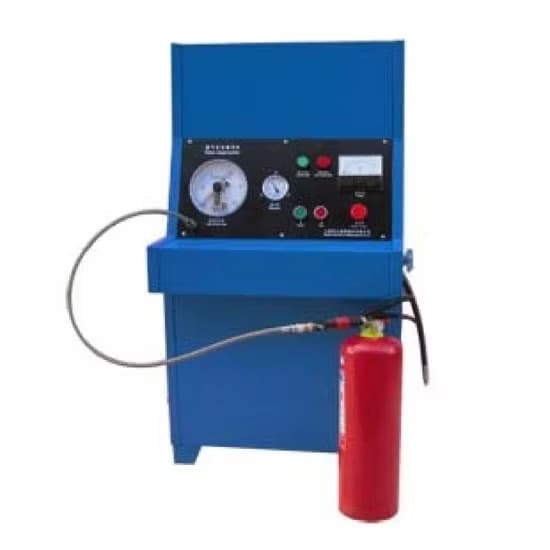
Finally, any extinguisher you buy must be serviced annually by a qualified technician under SANS 1475 — the South African standard widely referenced across Namibia. An unserviced unit can lose pressure or clog, and many insurers expect a current service record. Buying the right extinguisher is step one; keeping it serviced is what keeps it working.
What to buy: house, rental or shop
- House: A 4.5 kg or 9 kg DCP unit near the main exit, plus a fire blanket in the kitchen. Add a CO2 unit if you have a home office or sensitive electronics.
- Rental: Landlords should fit a fixed, mounted DCP unit and a kitchen fire blanket, and keep a service log — tenants rarely service units themselves.
- Small shop or workshop: Match units to stock and processes (foam for flammable-liquid storage, CO2 near electrical panels), mount them on signed escape routes, and service on a strict schedule.
Need a technical audit?
Ensure your facility's fire systems meet SANS and ISO compliance standards.
Book an auditFires are grouped into classes
A, B, C, D and F — and no single extinguisher covers all of them.
A dry chemical powder (DCP / ABC) unit is the most versatile starting point for most homes.
DCP is not ideal for cooking-oil fires; a fire blanket or a wet chemical unit is the right tool there.
Match the extinguisher to your real risks: LPG cooking, generators and electrical faults each have a preferred answer.
Whatever you buy must be serviced annually under SANS 1475 to stay reliable and compliant.
- US National Fire Protection Association (NFPA) — Fire Prevention Week data on cooking as the leading cause of home fires (49%)
- City of Windhoek — locally cited fire causes (gas bottles, open flames, candles, paraffin lamps, electrical faults), reported via Confidente
- SANS 1475 — servicing of portable fire extinguishers (the South African standard widely referenced in Namibian practice)
- SANS 1910 — manufacturing standard for dry chemical powder extinguishers
Fire Protection Essentials
SANS 1475 Certified equipment available directly from our online store.